
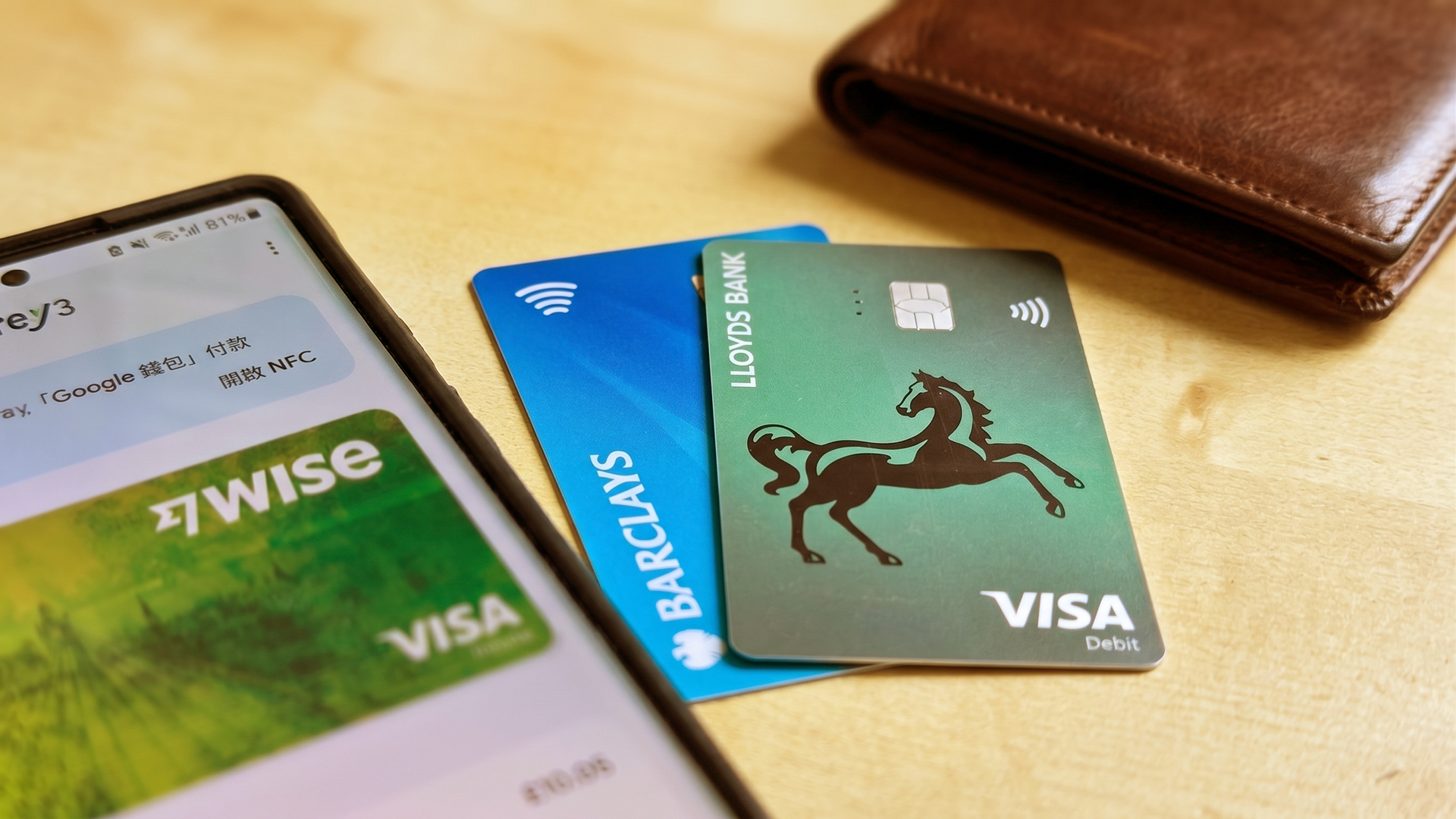

Upon arriving in the UK, looking at those slightly clunky card terminals by the tills, I couldn’t help but wonder: “Why is NFC (contactless payment) still the standard here?” To a Hong Konger accustomed to the all-encompassing QR code—where a mere camera lens handles everything with surgical efficiency—the British system seemed almost archaic.
Yet, as I stood in British supermarkets, hearing that crisp “beep” whenever my card met the reader, that solid feedback of physical contact began to reveal a different kind of wisdom. It is a collective intelligence hidden behind common habits—a near-primitive insistence on “reliability.”
The Forgotten “Tactile” Security
Back in Hong Kong, we were enamoured with “frictionless” convenience. Scanning a QR code is, at its heart, an interaction with a floating string of virtual patterns. What lies behind that pattern? A payment link, a phishing site, or a hidden vulnerability? We rarely dug deep. Because everyone else was scanning, a collective blindness gave us a false sense of security—as if by sharing the risk, the risk itself vanished.
But in the UK, the “centimetres-only” physical limitation of NFC provides a long-lost sense of agency.
It is no longer a virtual interaction within a video game interface. NFC requires a genuine physical proximity; it is an invisible gate. By comparison, a QR code is like an open window facing the high street—convenient for entry, but exposing everything inside to passers-by. I began to realise that the British preference for this “physical distance” is actually a defence of financial sovereignty. They do not trust visual data that can be swapped or altered in a heartbeat; they trust the moment two pieces of hardware physically acknowledge one another.
From “Market Dependency” to “Autonomous Scrutiny”
This realisation brought back memories of my technological superstition in Hong Kong. We assumed that because the providers were giants and the market trend was set, any failure would be met with compensation. We “outsourced” our scrutiny of safety and quality to the market.
However, living here—managing a house, a roof, a garden—I’ve learnt how fragile that “outsourcing” mindset is. The British adherence to NFC follows the same logic as their multi-generational approach to roofing: they seek a fundamental security that doesn’t rely on someone else’s compensation.
It is a collective self-awareness. Rather than waiting for a patch to fix a leak, they choose a system with a more stable, closed underlying logic from the outset. This caution isn’t conservatism; it is a sober trade-off made after seeing that “efficiency” often comes at the cost of security.
Redefining Efficiency
I used to think scanning was fast. Now, I see that the “immediacy” of NFC is a higher form of efficiency.
The process—void of focusing cameras, network lags, or toggling screen brightness—hides complex logic within the most reliable physical interaction. This “sophisticated simplicity” is less about tech and more about an attitude toward life. When we stop chasing the “trend” at the expense of the essence, we begin to align with the British pulse of long-term stability.
Conclusion
Walking through London or Manchester, I still occasionally miss the convenience of scanning a menu. But when I reach into my pocket, pull out my card, and feel that light “clack” against the reader, I feel a grounding sense of reassurance.
I have learnt to stop blindly following the market winds and started to discern the kind of reliability that stands the test of time.
Choosing NFC over the QR code is not merely a technical debate; it is about whether one is willing to step out from “virtual efficiency” and re-embrace a sincere, steadfast commitment to the physical world and one’s own sovereignty.
Reference
When exploring the cybersecurity aspects of “NFC (Near Field Communication) vs. QR Code” mobile payment methods, cybersecurity experts and financial institutions generally agree that NFC is significantly more secure than QR codes.
This is primarily due to NFC’s hardware-level encryption chips (Secure Element), dynamic Tokenization technology, and extremely short communication range (which minimizes the risk of remote interception). In contrast, a QR code is merely a visual graphic with no built-in encryption, making it highly susceptible to physical alteration or overlay attacks (often referred to as “Quishing” or QR phishing). Below are 3 pieces of evidence and website links proving that NFC is more secure than QR codes:
1. Stripe Official Guide
- Information Title: The difference between NFC and QR code payments
- Security Evidence: Stripe’s official guide points out a critical security flaw in QR codes: the codes themselves do not include any built-in security measures. Scammers frequently exploit this by physically swapping a legitimate merchant’s QR code with a fraudulent sticker, redirecting customer payments to their own accounts. NFC, on the other hand, integrates seamlessly with advanced point-of-sale (POS) systems and global credit card networks, offering robust, hardware-level transaction security that cannot be easily “physically swapped.”
- Reference URL: https://stripe.com/resources/more/the-difference-between-nfc-and-qr-code-payments
2. Academic Research Paper (via ResearchGate)
- Information Title: Comparison of Mobile Transaction Security Using NFC and QR Codes
- Security Evidence: Published in 2024, this peer-reviewed academic study conducts a comparative analysis of both payment technologies. The findings conclude that NFC transactions offer superior data security. NFC utilizes “Secure Elements” (SE) that actively encrypt credential data at the hardware level during a transaction. Conversely, QR code payments often transmit data in its original, unencrypted form and are highly vulnerable to cyber attacks where malicious URLs are embedded within the visual code, leading to device infection or data breaches.
- Reference URL: https://www.researchgate.net/publication/385507567_Comparison_of_Mobile_Transaction_Security_Using_NFC_and_QR_Codes
3. FinTech & E-Wallet Tech Analysis (by DigiPay)
- Information Title: Exploring NFC and QR code payments: The future of E-Wallet transactions
- Security Evidence: This FinTech industry analysis highlights that NFC payments leverage advanced “Tokenization” and device-level encryption. Every time an NFC transaction occurs, a unique, one-time code (token) is generated, ensuring that actual bank or credit card details are never exposed in the air or on the merchant’s terminal. QR codes, especially static ones printed on paper, lack this dynamic cryptographic layer at the hardware level, making NFC significantly harder to compromise or intercept.
- Reference URL: https://www.digipay.guru/blog/exploring-nfc-and-qr-code-payments/