
Having lived in the UK for some time now, the thing that has moved me most isn’t the fresh air or the sprawling greens—it is the roof that sits above my head every single day.
In Hong Kong, our concept of “living” is inward-looking and two-dimensional. Most of us reside in high-rise concrete boxes; your ceiling is someone else’s floor, and your floor is someone else’s ceiling. It is a “passive” existence. A leak from above is “an act of God” you can only complain about; a complaint from below about your footsteps feels like surveillance. Our living spaces are like modern 3D video games: to save system resources, the developers only render the surfaces the player can see. What lies behind the walls? What sits upon the roof? We never care, and we have no right to care. This environment restricts our imagination of a “complete entity,” habituating us to a fragmented view of the world.
The Roof: From Virtual Facade to Three-Dimensional Reality
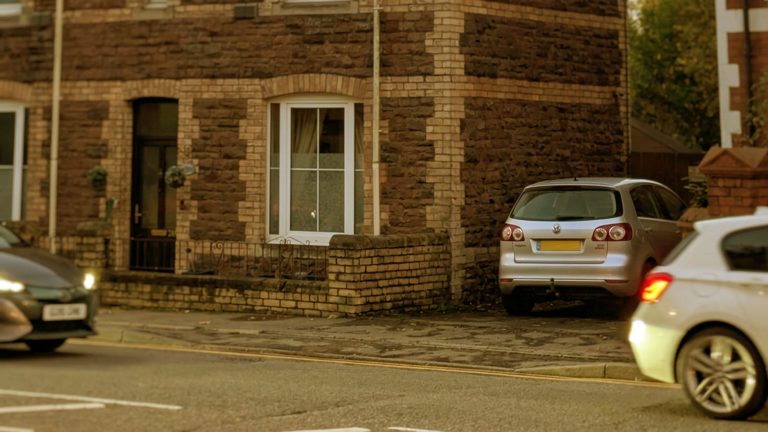
In the UK, when you move into a house—be it detached or semi-detached—you no longer own a mere collection of “surfaces.” You own a complete, three-dimensional geometric life-form.
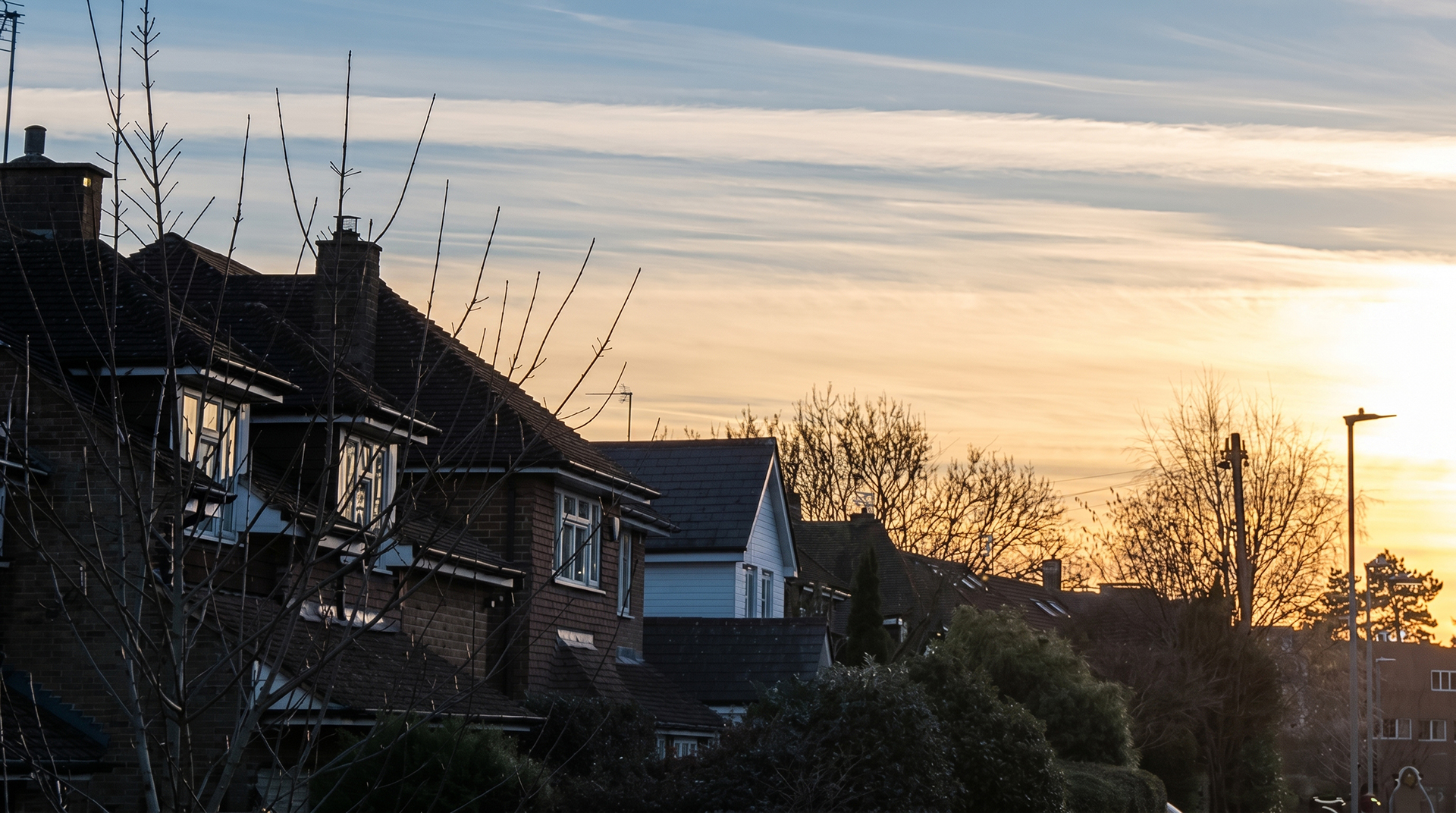
When the rain lashes down or the snow settles, what you hear is no longer a hollow echo, but the rhythmic percussion of droplets hitting the tiles. You find yourself instinctively wondering: “Are my tiles holding up?” “Are the gutters blocked?” This direct connection to the elements makes you realise, in an instant, that you are no longer a consumer sheltering under the umbrella of a developer or the government. You are an independent guardian.
This sense of “autonomous control” performs a profound baptism on one’s outlook on life:
- Responsibility and Quality: You understand that the structure and maintenance of the roof are inextricably linked to your quality of life. Maintaining such a “major component” fosters a respect for the essence of things, moving beyond the superficiality of interior decoration.
- A Sense of Agency: Unlike the rooftops of village houses in Hong Kong—which are often leased to telecoms companies for signal towers or restricted by complex building codes—a British roof is an extension of your will. Whether it is installing solar panels or undertaking a loft conversion, the confidence that “I can change my environment” is the very seed of innovation.
Why Do “Roofs” Breed Innovation?
This relates directly to “garage culture” and a “holistic sense of space.” Why is it that countries with a high proportion of standalone houses, like Britain and the US, cultivate such a staggering number of creative talents?
The data suggests a compelling link. According to the Global Entrepreneurship Monitor (GEM), the United Kingdom and the United States consistently maintain high rates of Total Early-stage Entrepreneurial Activity (TEA) compared to many highly urbanised, high-density economies.
The logic is simple: when a young person grows up in a three-dimensional house that can be dismantled, maintained, and modified, their understanding of the physical world is macro and profound. They know how the wiring is routed, how the plumbing connects, and how a roof bears a load. This groundedness in problem-solving is the essence of the culture that built Silicon Valley. In contrast, those living in concrete boxes are conditioned to react to problems by simply “calling the management office.”
Roof Maintenance: A Relay Race Spanning Generations
However, this macroscopic perspective comes at a literal price. In the UK, finding a reliable and professional roofer is a Herculean task.
The market is gargantuan. If a single district has a thousand houses, every single roof has its own lifespan. Even if a tradesman works tirelessly, completing a full cycle of maintenance for an entire area could take decades. This is why many roofing firms are family legacies, spanning three or four generations. The demand is infinite; the work is never truly done.
This “slowness” and “patience” serves as a lesson to those of us from the high-speed hustle of Hong Kong: some things cannot be rushed; they require long-term stewardship and care.
Conclusion
Moving from a Hong Kong “ceiling” to a British “roof” is more than a geographical shift; it is a psychological transition from a “passive tenant” to an “active creator.”
While New Territories village houses in Hong Kong also have roofs, those flat concrete slabs are often viewed merely as platforms for drying laundry or storing junk—not to mention the helplessness of having them used as base stations. In the UK, when you stand in your garden and look back at your roof, you see a complete home—a three-dimensional dream that you can manage, optimise, and pass on.
This is perhaps the most profound lesson life has taught us here: when you begin to manage your roof, you truly gain the breadth of mind and vision to manage your life.
Reference
The Atlas of Innovation Districts & City Science: Performance Follows Form
According to a quantitative study of 50 major innovation districts across the United States conducted by Aretian, an urban analytics firm spun out of the Harvard Innovation Lab, there is a distinct correlation between building height, urban morphology, and “Innovation Intensity” (the percentage of a population employed in innovative and knowledge-intensive roles)[1]. The data reveals that while human-scaled mid-rise environments (5 to 7 stories) represent the optimal peak for innovation, long-term urban populations living in towering high-rise apartments actually exhibit a lower innovation rate compared to populations residing in low-density detached housing areas (such as single-family homes). The research indicates that massive vertical high-rise structures severely restrict serendipitous ground-level social interactions and lack spatially adaptable environments. In contrast, low-density detached housing neighborhoods—typical of suburban innovation hubs like Silicon Valley—offer highly flexible private “maker spaces,” such as independent garages and workshops. This horizontal spatial adaptability actively supports grassroots experimentation, hardware prototyping, and the famous “garage startup” culture, allowing populations in low-density detached homes to maintain a notably higher innovation intensity than those isolated in rigid, highly regulated high-rise apartment blocks.
Reference URL: https://www.aretian.com/atlas